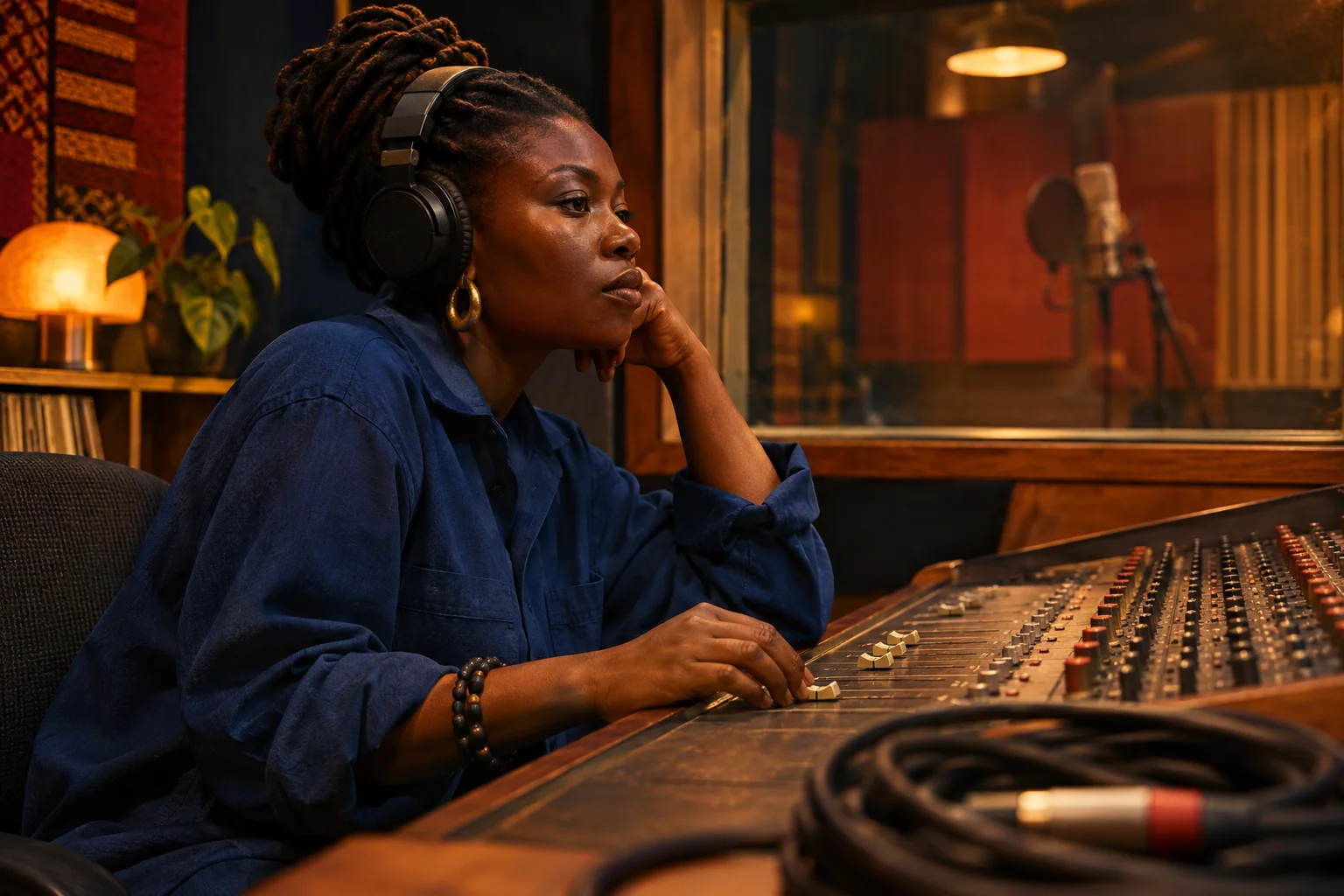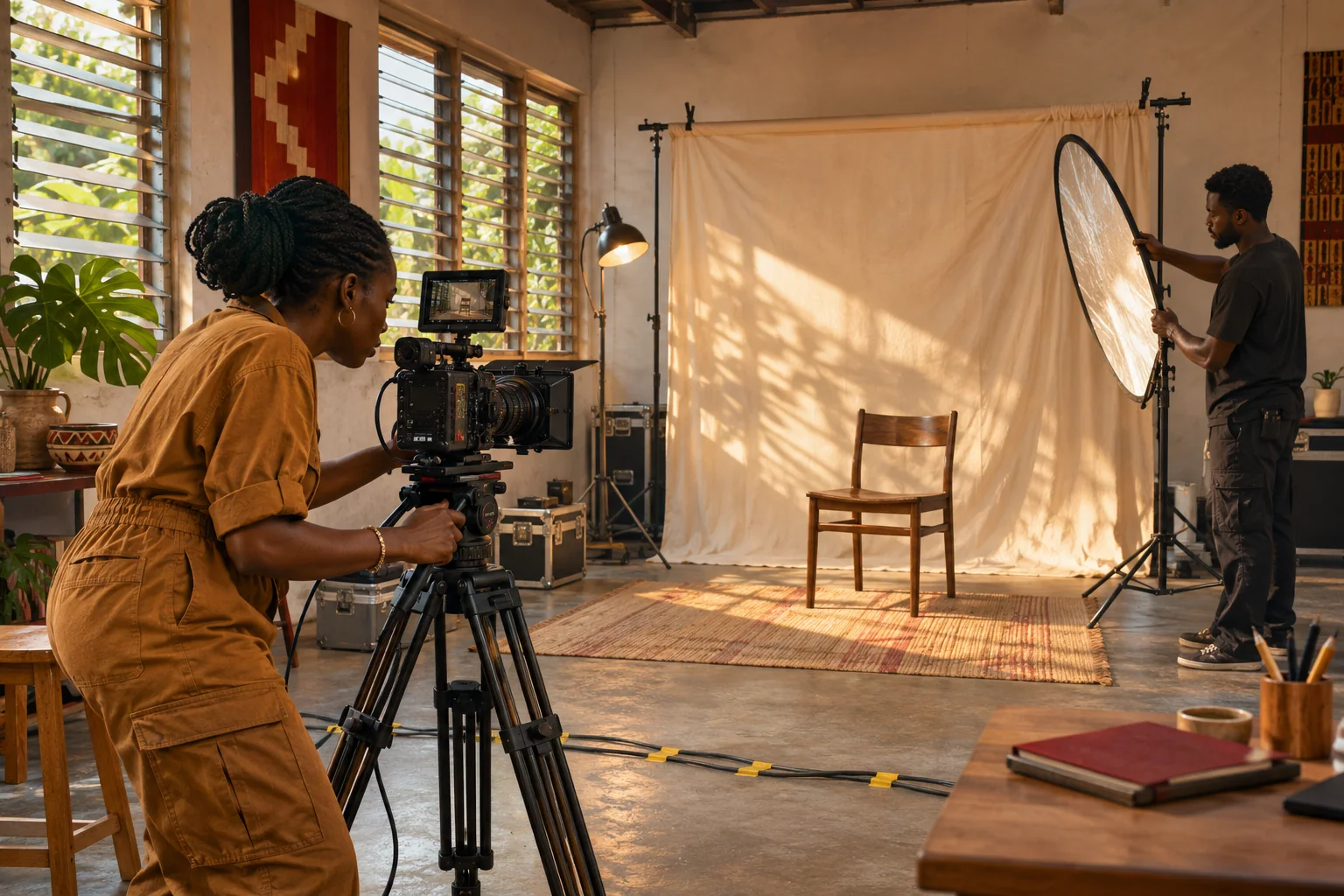
Begin with a character who has come into a room to do one thing and cannot quite bring themselves to do it.
They might have brought a letter to return, a shirt to collect or a recording to play. Give the object a purpose. Then decide what makes the action difficult. The film begins to take shape when the character must choose.
This is a deliberately small writing exercise. One room gives you a boundary within which to make specific decisions about performance, framing and rhythm.
Write what changes
Before writing dialogue, describe the situation in three sentences: what the character intends, what interferes and what is different when the scene ends.
Here is an invented example. A costume assistant arrives to return a jacket after their last day on a production. Inside the pocket is a note they wrote to themselves at the beginning of the job. They must decide whether to leave it there or take it home.
You do not need to explain the character's entire life. Choose the few visible actions that make this moment legible.
Give each frame a task
Sketch four possible views: the room, the character, the important object and the action that changes the situation. Ask what each view reveals. If two frames do the same job, decide whether both are useful.
The sequence can be quiet. A hand stopping at a pocket can carry a decision if the preceding images have prepared the viewer to understand it.
Try a rehearsal with a phone before choosing additional equipment. Watch it without explaining the plot to the viewer. Where do they become confused? What do they understand before the dialogue tells them?
Plan the ending before the shoot
Decide which action closes the scene, what the audience should understand and which questions can remain open. Reserve time to capture that ending with the same attention given to the opening.
Then make a simple production note: the people involved, the room you have permission to use, the props, the planned shots and the time available. Agree the credits with your collaborators.
After assembling the first cut, ask one person to describe the character's decision. Their answer is more useful than a general verdict that the film looks nice. You now have a specific piece of feedback to work with, and a scene you can actually finish.