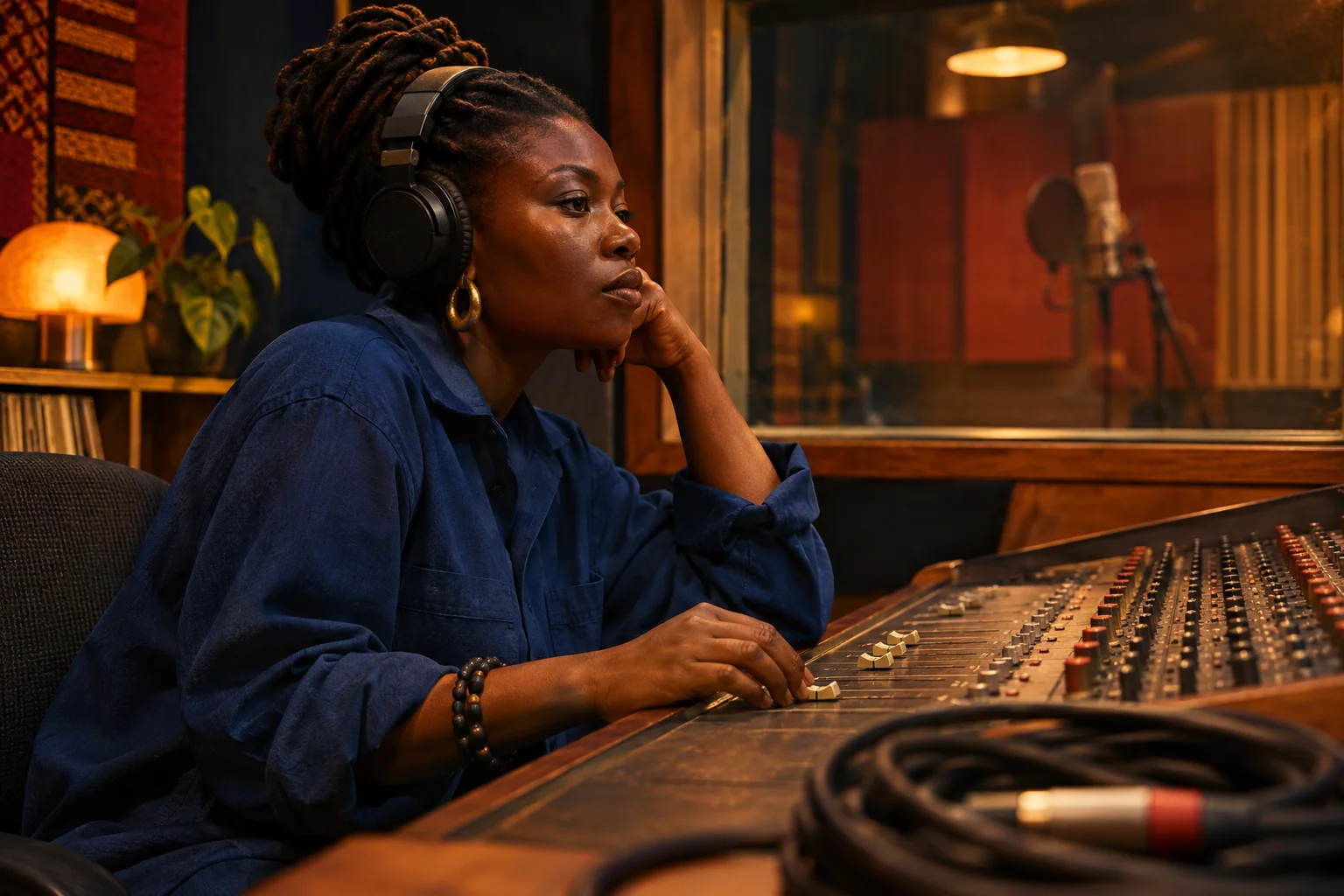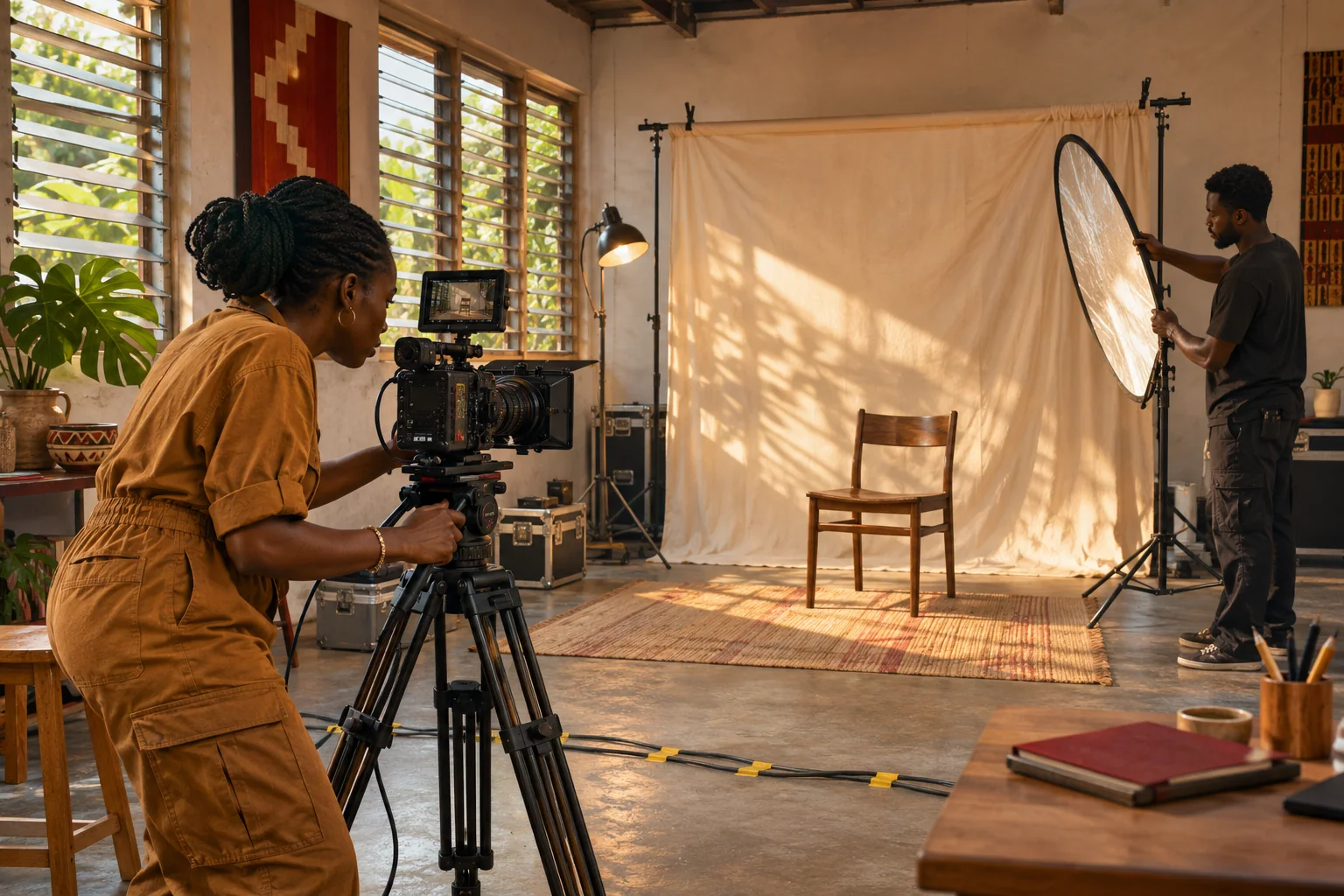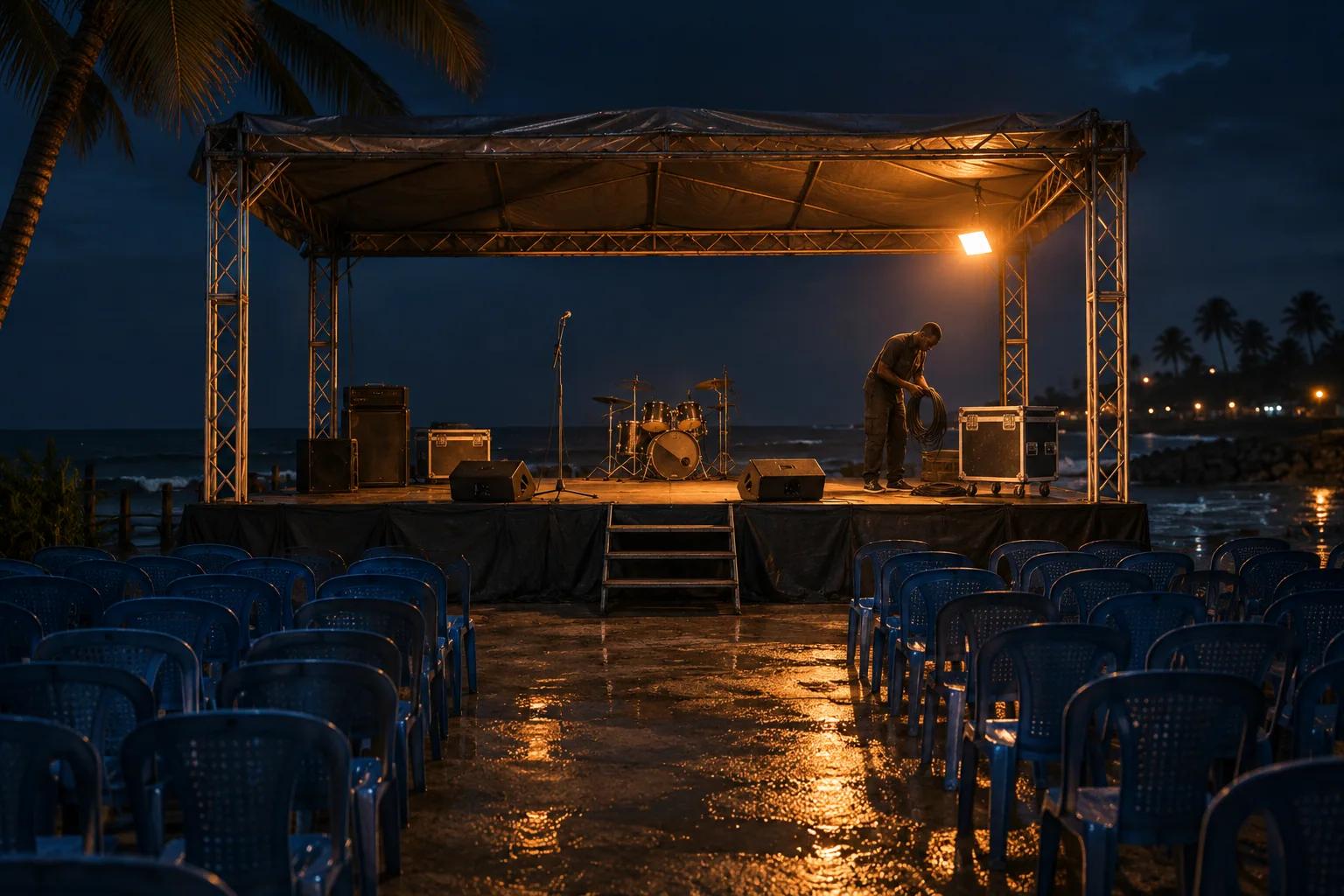
Picture a stage after the audience has left. The microphone remains in its stand. A row of chairs points towards an empty space. A work light changes the atmosphere from performance to practical task.
The accompanying image imagines that interval. It is a prompt to look at the part of live culture that a highlight reel can easily pass over.
An event story can follow the singer's entrance, the clothes, the crowd and the final song. It can also ask who prepared the space and who is responsible for returning it to ordinary use.
Follow one task
For a future reported photo essay, choose one task and ask the person responsible to explain it. What needs to happen before they can leave? What must be checked? What would they want an audience to understand about this part of their work?
Keep the questions open. A photographer arriving with a ready-made story about invisible heroes may miss the actual experience of the worker in front of them. They might be proud of a particular system, frustrated by a delay or simply focused on finishing. Let their account determine the emphasis.
Make time for the conversation when it does not interrupt the task. Ask permission before taking photographs, and avoid turning a moment of fatigue into a dramatic image without context.
Look for a sequence
A useful sequence might move from the room as a whole to one action, then to a detail and a portrait. Each frame should contribute something different. A pile of equipment tells us little until a caption explains what we are looking at and why it matters.
Record names and roles accurately. Ask which details can be shared. If the story discusses working hours, payment or a dispute, obtain evidence and responses before making those claims.
Give the ending its own attention
The end of an event is a good place to ask what the team would change next time. The answers can bring a story out of spectacle and into the decisions that shape future performances.
After the Show could become a regular AciesDaily series built from those encounters. This opening essay proposes the way of looking. The reporting should come from real access, real conversations and photographs that carry their own dates and places.
The last frame need not be the loudest one. Sometimes an empty stage is where the next story starts.