“African print” can occupy the space where a more interesting story should be. It may tell a reader very little about how a particular cloth was made, who made it or what the person wearing it understands about it.
Specificity begins with curiosity. Is this material printed or woven? Does the maker use a particular name for it? Is the pattern newly designed, inherited, adapted or commissioned? The answers should come from people and records connected to the cloth.
The Ghana Commission for UNESCO records the 2024 inscription of kente craftsmanship and describes the passing of weaving knowledge through apprenticeship. That recognition offers a useful starting point for paying attention to the people behind a textile. Ghana Commission for UNESCO
Let the maker provide the language
A pattern can invite interpretation, but an attractive caption is not a reason to invent a meaning. Ask how the maker describes the design, which details they consider important and whether a name or explanation is appropriate to share publicly.
If the information is incomplete, a precise description of what is visible is still useful. Colour, construction and the way a garment moves can be described without assigning it an unverified cultural story.
A caption might name a designer and say that a material's origin has not yet been confirmed. That is more informative than attaching a confident label because the photograph looks familiar.
Give the detail enough space
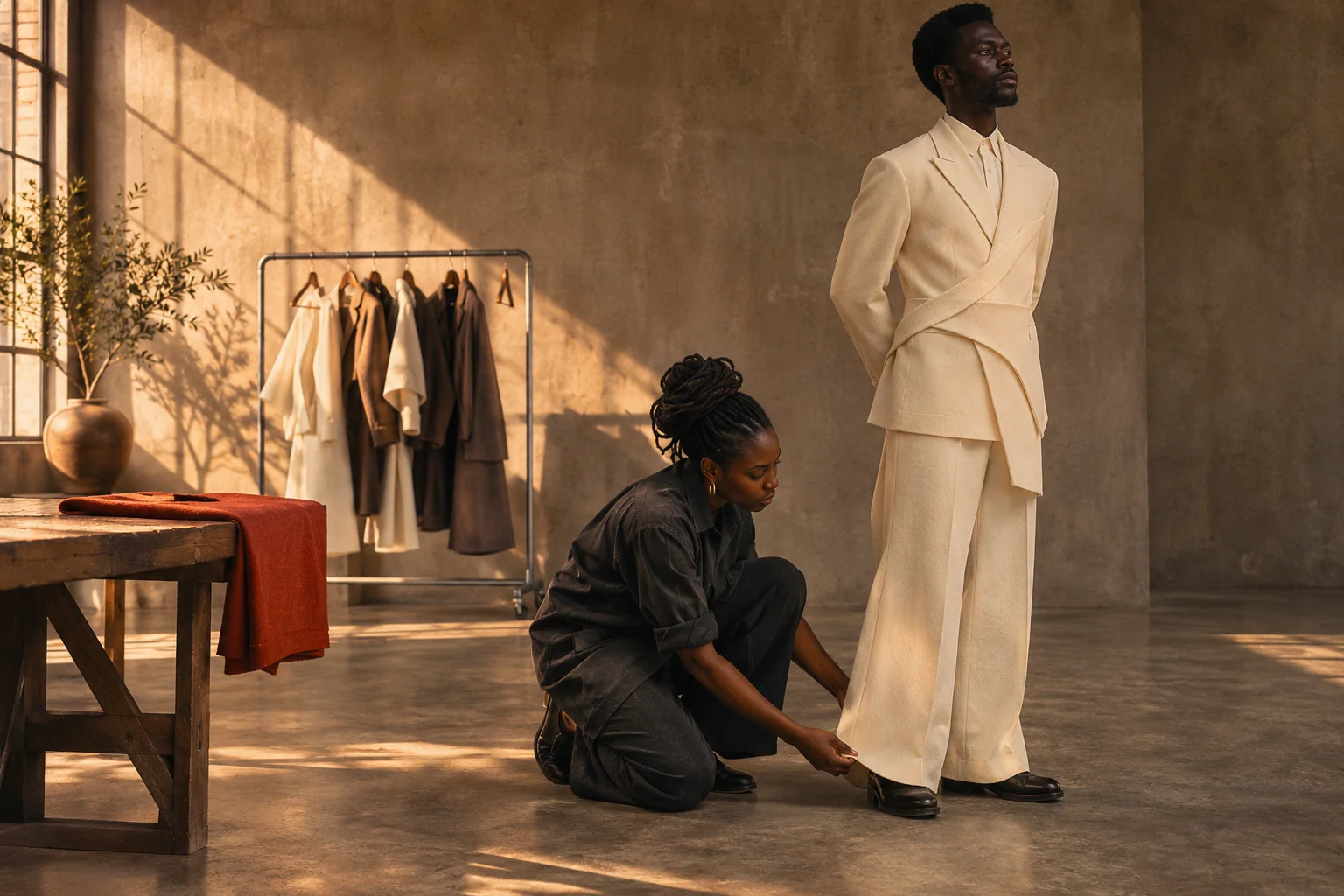
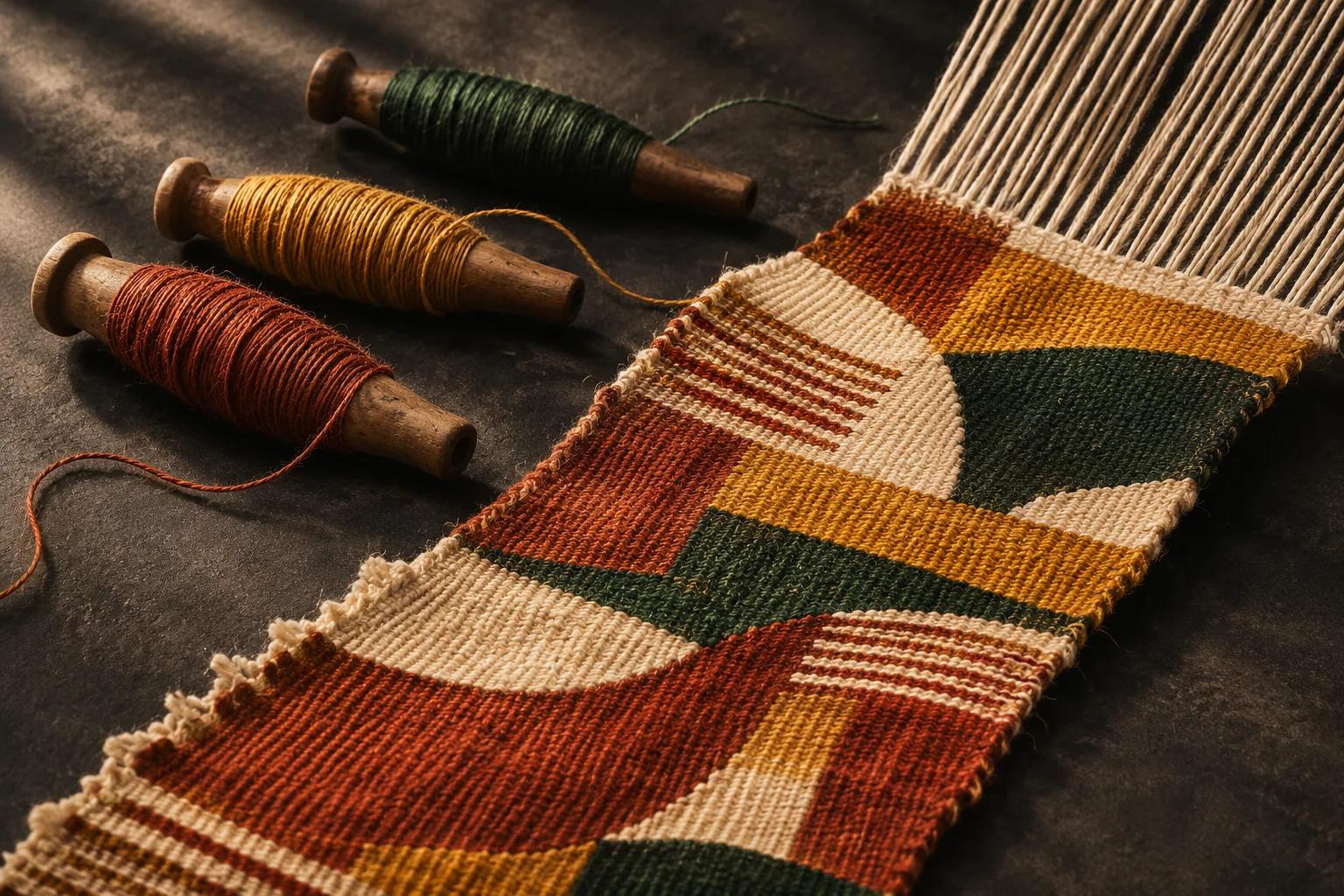
A full-length fashion photograph shows silhouette. A close view can show the relationship between threads, a seam or a finish. A third frame might show the cloth in use. Together, those images let a reader look beyond a pattern as decoration.
For a commissioned story, ask the maker which detail best demonstrates their work. Their choice may challenge the image an editor first imagined.
Begin a better notebook
For one garment you own, record what you know about its maker and material. Separate confirmed information from questions. If you can contact the maker, ask for a short explanation and permission to credit them.
This is an invitation to investigate a garment, not a demand that every wearer become a textile historian. A few accurate words can open a much richer conversation.
The image accompanying this essay is an invented AI illustration. A reported story about a particular weaving tradition should use properly identified photographs and the knowledge of its practitioners.