“We need content” leaves a lot of room for disagreement. One person may imagine a short portrait film. Another may expect product photographs, several social posts and a behind-the-scenes video.
A short creative brief gives those expectations somewhere to meet before the shoot.
For an early project, the document can be simple. Write what you are making, who should respond to it and what you want them to understand. Then describe the actual deliverables in ordinary language.
Turn a mood into a task
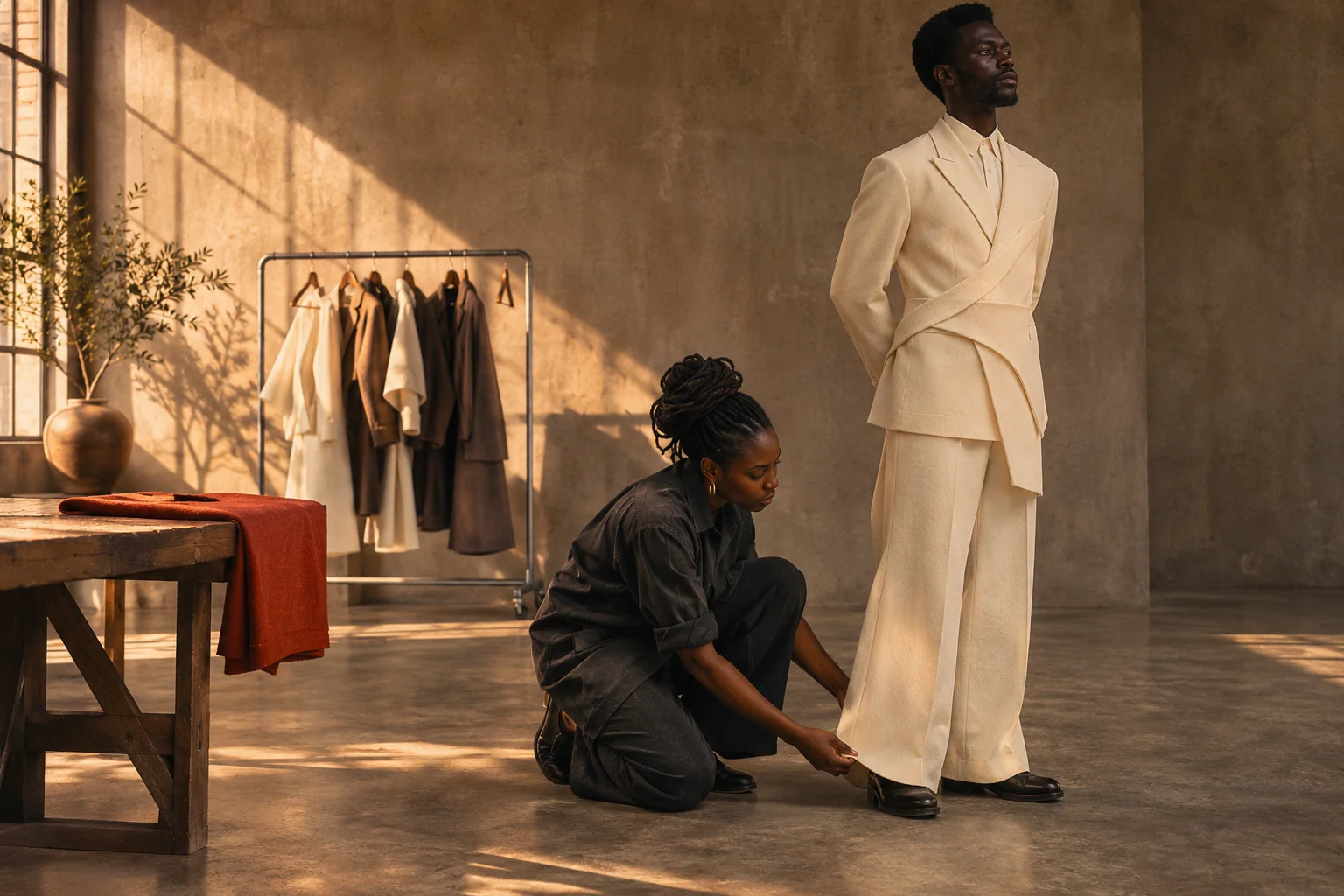
Consider a hypothetical small clothing label preparing to introduce one shirt. “Make it feel premium” is a mood. “Show the fit, fabric detail and three ways to wear it” gives the team something to plan.
The brief might ask for a front view, a side view, a detail and a short movement clip. Add where each item is intended to appear so the photographer can consider framing. If a website banner needs space beside the subject, say so before the image is made.
Attach a few references and explain what you like about each. A reference without an explanation can send people towards very different interpretations.
Name the decisions
Agree who can approve the clothing, who chooses the final images and who gathers feedback. Give the team one place to find the latest decisions.
Also record the practical boundaries: the available time, location access, people involved, items that must be ready and what happens if a key person or object is unavailable. Discuss charges, revisions and permitted uses explicitly with the people providing the work; a creative brief alone does not settle those arrangements.
A smaller scope can be a sensible creative choice. Decide which result matters most and make sure the schedule gives it enough attention.
Check whether the brief works
Read it to a collaborator without adding an explanation. Ask them to describe the finished project back to you. Any difference is worth resolving while the project is still words on a page.
At the end, compare the delivered work with the agreed description. Record what changed and what you would specify more clearly next time.
Good planning leaves room for invention on the day. It gives the team a shared starting point, so a useful improvisation can be recognised as a choice rather than confused with an unfinished task.